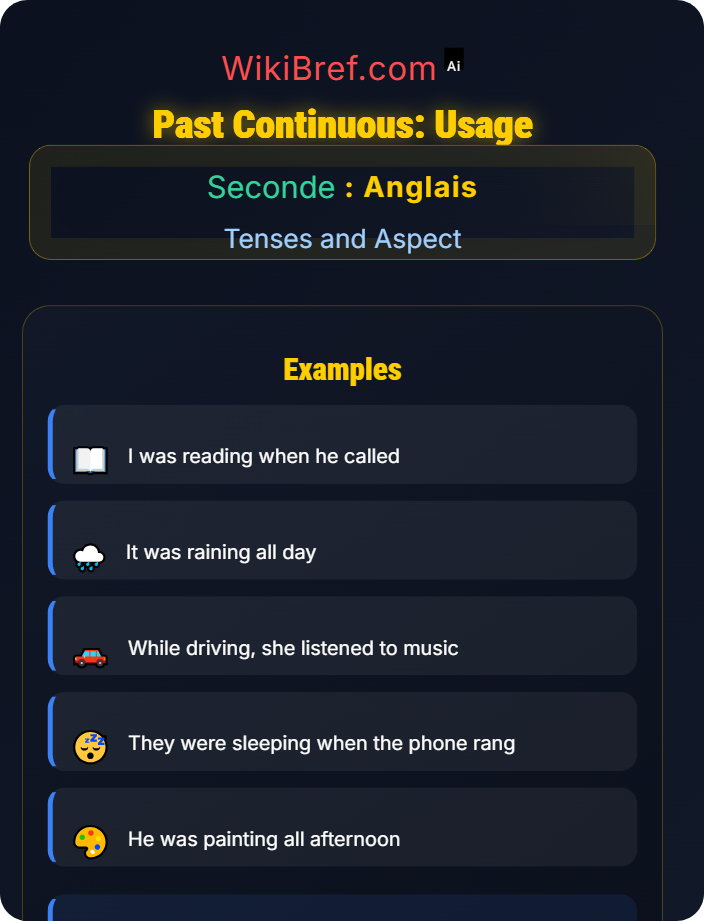
They were playing when...
Past Continuous : Utilisé pour les actions en cours dans le passé.
"while" indique des actions simultanées en cours
1er sujet : I, 2e sujet : my sister
S + was/were + V-ing
I + was + reading / my sister + was + cooking
Deux actions en cours simultanément = Past Continuous
I was reading a book while my sister was cooking.
• Past Continuous : Pour actions en cours dans le passé
• While : Indique des actions simultanées
• Structure : S + was/were + V-ing
Past Continuous négatif : Pour nier une action en cours.
"when the phone rang" = action brève (Past Simple) interrompant action continue
Sujet : She (troisième personne du singulier)
She + was not (wasn't) + V-ing
sleep → sleeping
Elle ne dormait PAS pendant que le téléphone sonnait
She wasn't sleeping when the phone rang.
• Négation PC : S + wasn't/weren't + V-ing
• When : Action brève interrompant action continue
• Wasn't : Pour he/she/it au négatif
Past Continuous interrogatif : Pour poser des questions sur une action en cours.
"at 8 PM yesterday" indique un moment spécifique dans le passé
Sujet : you (deuxième personne)
Auxiliaire + S + V-ing + ?
You = were (auxiliaire)
watch → watching
Were you watching TV at 8 PM yesterday?
Were you watching TV at 8 PM yesterday?
• Question PC : Were/Was + S + V-ing + ?
• Were : Pour you, we, they
• At + heure : Indique un moment précis
Past Continuous avec interruption : Action en cours interrompue.
"when it started to rain" = action brève (Past Simple) interrompant action continue
Sujet : They (troisième personne du pluriel)
They + were + V-ing
play → playing
Le football était en cours quand il a commencé à pleuvoir
They were playing football when it started to rain.
• PC pour action en cours : Were + V-ing
• When + Past Simple : Action brève interrompant action continue
• Were : Pour they, we, you
Past Continuous pour action continue : Action prolongée dans le passé.
"all evening" indique une durée continue dans le passé
Sujet : He (troisième personne du singulier)
He + was + V-ing
study → studying
Il étudiait PENDANT TOUTE la soirée (action continue)
He was studying for his exam all evening.
• PC pour action continue : Was + V-ing
• All evening : Expression de durée continue
• Was : Pour he/she/it au singulier
Past Continuous négatif : Pour nier une action en cours.
"at that time" indique un moment spécifique dans le passé
Sujet : We (première personne du pluriel)
We + were not (weren't) + V-ing
listen → listening
Ils n'écoutaient PAS la musique à ce moment-là
We weren't listening to music at that time.
• Négation PC : S + weren't/wasn't + V-ing
• Weren't : Pour we/you/they au négatif
• At that time : Indique un moment précis
Past Continuous interrogatif : Pour poser des questions sur une action en cours.
"when you arrived" = action brève interrompant action continue
Sujet : she (troisième personne du singulier)
Auxiliaire + S + V-ing + ?
She = was (auxiliaire)
dance → dancing
Was she dancing when you arrived?
Was she dancing when you arrived?
• Question PC : Was/Were + S + V-ing + ?
• Was : Pour he/she/it
• When + Past Simple : Action brève interrompant action continue
Past Continuous pour action continue : Action en cours dans le passé.
"peacefully in their beds" décrit une action continue
Sujet : The children (troisième personne du pluriel)
The children + were + V-ing
sleep → sleeping
Les enfants dormaient paisiblement (action en cours)
The children were sleeping peacefully in their beds.
• PC pour action continue : Were + V-ing
• Children : Pluriel = were
• Description : "peacefully" renforce l'idée d'action continue
Past Continuous négatif : Pour nier une action en cours.
"yesterday afternoon" indique une période spécifique dans le passé
Sujet : I (première personne du singulier)
I + was not (wasn't) + V-ing
work → working
Je ne travaillais PAS à la maison (action continue négative)
I wasn't working at home yesterday afternoon.
• Négation PC : S + wasn't/weren't + V-ing
• Wasn't : Pour I/he/she/it au négatif
• Yesterday afternoon : Période spécifique dans le passé
Past Continuous interrogatif : Pour poser des questions sur une action en cours.
"when you saw them" = action brève interrompant action continue
Sujet : they (troisième personne du pluriel)
Auxiliaire + S + V-ing + ?
They = were (auxiliaire)
wait → waiting
Were they waiting for the bus when you saw them?
Were they waiting for the bus when you saw them?
• Question PC : Were/Was + S + V-ing + ?
• Were : Pour they/we/you
• When + Past Simple : Action brève interrompant action continue